
When a Student Struggles to Engage, What Do You Try Next?
You know how to teach music.
But when an autistic or ADHD student comes to a lesson overwhelmed, dysregulated, or unwilling to engage, it can be hard to know what they need from you in that moment.
You may have plenty of teaching strategies. What you may not have is a sensory-informed framework for deciding what this particular student needs to become regulated, engaged, and ready to learn.
That's where I can help.
When a student comes into a lesson overwhelmed, completely unfocused, or unable to engage, more teaching strategies may not be what they need first.
They may need help becoming calm enough to be engaged and ready to learn.
I call this Learning Readiness.
And Learning Readiness won't look exactly the same for every student. One student may need movement and have lots of energy while they're engaged, while another may be quieter.
The goal isn't to make every student look calm.
It's to understand what regulation looks like for this particular student so they can access learning.
Before Learning Can Happen, a Student Needs to Be Ready to Learn
My Sensory-Informed Engagement Triangle
Knowing that a student isn't ready to learn is one thing. Knowing what to do next is another.
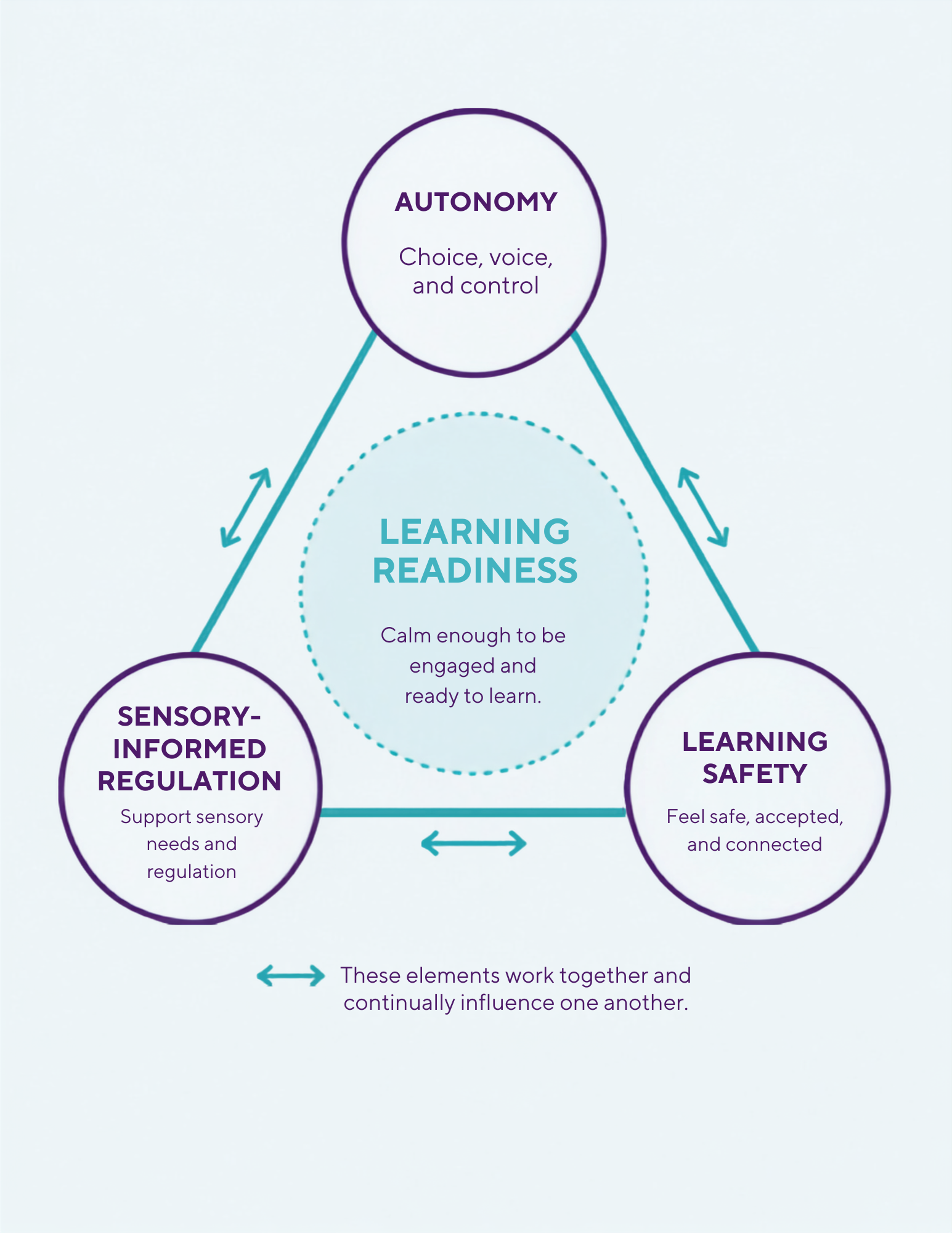
That's why I developed My Sensory-Informed Engagement Triangle—a framework that brings together Sensory-Informed Regulation, Autonomy, and Learning Safety to support Learning Readiness.
Everything begins with Sensory-Informed Regulation. As a student's regulation is supported, greater opportunities for Autonomy and Learning Safety become possible. Together, these elements continue to influence and reinforce one another.
The goal: helping each student become calm enough to be engaged and ready to learn.
A student arrives overwhelmed, exhausted, or unable to engage.
Instead of immediately trying to redirect them into the lesson, you begin by noticing how they're arriving and asking what their nervous system may need to become more regulated. The answer will be different for each student—and may even be different for the same student from one lesson to the next.
As regulation is supported, the student becomes more available for connection and learning. Learning Safety grows, and opportunities for Autonomy become more meaningful.
You might offer a choice within a gentle structure:
“Would you like to start at the piano or with a game on the floor?”
Or turn a transition into a rhythm game by inviting the student to create a walking or marching rhythm you do together.
The strategy isn't the starting point. Sensory-Informed Regulation is.
What Could This Look Like in Your Music Lesson?
Support You Can Feel Comfortable With
“Hemdah knows a LOT when it comes to neurodivergent students within a private learning environment. She’s helped broaden my own personal knowledge when it comes to neurodiversity within the studio room. Her genuine personality makes opening up and discussing difficult topics easy.”
— Ani Lierheimer, Business Owner, Piano and Clarinet instructor
This Is for You If...
You know there's so much potential in your autistic or ADHD students, but you struggle to help them access it, and you're ready for a different way to help them feel safe, engage, and grow.
You want to understand what may be happening beneath a student's behavior instead of continuing to guess what to try next.
You want practical strategies—and a sensory-informed framework to help you decide when and why to use them.
You want to support regulation without lowering expectations or losing sight of meaningful musical learning.
You want to feel more confident making teaching decisions that help your students feel safe, empowered, and ready to learn.
What It's Like to Work Together
“I have learned more tools for myself and my students to help with learning readiness and calming strategies. I’ve brought specific teaching issues to Hemdah, where she always has great ideas. She approaches her coaching with a calm and caring spirit and will tailor it to your specific needs.”
Lisa McCluer
Piano Teacher, McCluer Music
Three Ways to Work With Me
Choose the level of support that fits what you need right now.
For the music teacher who wants deeper, ongoing support to understand their students and create lasting change in their teaching.
Over eight weeks, we'll work together to understand what's happening beneath the challenges you're seeing, apply sensory-informed regulation to your specific students, and build greater confidence making decisions from lesson to lesson.
Includes:
8 weekly 60-minute coaching sessions
Voxer support throughout the 2 months
2-Month Regulation Redesign Partnership — $997
For the music teacher who wants focused support around current challenges and a clear sensory-informed plan for moving forward.
Over four weeks, we'll identify what may be getting in the way of Learning Readiness and develop strategies you can begin applying with your students right away.
Includes:
4 weekly 60-minute coaching sessions
Voxer support throughout the month
1-Month Regulation Reset - $597
1-Week Intensive Strategy Sprint - $297
For the music teacher who has a specific student or teaching challenge and wants concentrated support without a longer commitment.
We'll focus on the challenge you're facing, identify what your student may need, and develop practical sensory-informed strategies you can begin using in your lessons.
Includes:
One 60-minute private coaching session
One week of Voxer support
One 45-minute follow-up session to review what happened and make adjustment
What Music Teachers Are Saying
“Hemdah’s deep knowledge and experience in special education provided me with the tools and strategies needed to create a more inclusive and supportive learning environment. She patiently guided me in understanding the unique needs of neurodivergent students, teaching me how to adapt lessons, manage behaviors with empathy, and foster meaningful connections with my students.
Her insights not only improved my teaching approach but also strengthened my confidence in working with diverse learners. Beyond her expertise, Hemdah’s kindness and dedication stand out. She genuinely cares about both educators and students, ensuring that every child has the opportunity to thrive.”
— Gulnisa Babayeva, Music Teacher
Still Not Sure Which Option Is Right for You?
Let's talk about what's happening in your lessons and which level of support might be the best fit.